Monday, 15 March 2010

The Inclusion Health Report, and a trip to Buck House

It’s been an interesting fortnight – like most fortnights – with a lot of variety.

Last Thursday we hosted the launch of a landmark report, 'Inclusion Health', which looks at the role of primary care in addressing the needs of our socially disadvantaged and harder to reach groups.

New analysis by the Social Exclusion Taskforce in the Cabinet Office and the Department of Health in England shows that despite the progress we have made in healthcare, people such as the homeless, those with learning disabilities, people leaving prison and sex workers, are still finding it difficult to access the services they need, often with life limiting results.

My reasons for wanting to be a GP are the same today as when I was at school – I wanted to make a difference and help people less fortunate than myself. It’s something that’s really driven me throughout my career. Working in a particularly deprived area is so rewarding, but incredibly frustrating. We have lots of disadvantaged groups and I still feel we can do more to reach out and make sure we are providing the care they need and helping them live as long and healthy lives as possible.

We’ve acknowledged the need for clinical leadership and I’m delighted to have been asked to chair the new National Inclusivity Board. We need to think differently about disadvantaged groups and I’m determined that high quality general practice plays a key role in improving such poor outcomes.


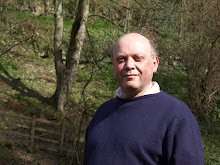
Photograph © FreeFoto.com  

Last Wednesday will stand as one of the highlights of my career, and I was enormously humbled and honoured to go to Buckingham Palace to pick up my CBE. It was a wonderful day for both myself, and for my family, who came with me. I must confess that, although meeting the Queen is something that doesn’t happen every day, I was even more excited to meet ex-England football captain Jimmy Armfield, one of my childhood heroes. It’s difficult, when surrounded by people who have done so many great things for disadvantaged people, not to feel like a fraud collecting an honour, but this prize is not just for me, it’s recognition for the College, for Bellevue Medical Centre, and for all of us GPs, and the hard work we do every day.

Last week I was also summoned to give evidence to the Health Select Committee on the use of overseas doctors in providing out-of-hours services. The tragic case in Cambridgeshire served to highlight the unacceptable variance in OOH care across the country, and we must all work together to ensure that, regardless of where patients live, they can expect to receive a universally excellent quality of care from a competent doctor whether it’s day- or night time.

I had some fantastic trainees shadowing me last week, and once again I have been so impressed with the enthusiasm and willingness to learn demonstrated by our Associates in Training. I’ve been trying to reach out to the younger members and it’s been great to see so many take up my offer to spend a day at the college. What’s more, it’s fantastic having these keen, young doctors around, and so rewarding to give them an insight into the other side of general practice.

Thanks as always for your support. I value your opinions and feedback enormously, and I urge you to get in touch if you have any comments or questions for me.

Friday, 12 February 2010

The Out of Hours Care Report

The last week has been very busy, both politically at a national level and locally in my surgery, but most of my time has however been focused on the issue of the performers‘ list and Out of Hours provision, following the inquest into the tragic case of Mr Gray. The Coroner was very clear in delivering a verdict of unlawful killing on the Out of Hours doctor Daniel Ubani. This whole case has upset me greatly, and clearly this was an appalling tragedy. I do feel for Mr Gray’s family, and I admire how Stuart Gray, his son and West Midlands GP, has handled himself throughout what must be a really difficult time.

The independent review that I carried out with the Primary Care Tsar Dr David Colin Thomé was published immediately after the inquest. The Minister, Mike O’Brien, David and I were immersed in news and television interviews for most of the day. Most went reasonably well but Jeremy Vine, and then Edwina Currie had a go at me – ‘the good professor’. They seemed to think that we should go back to pre-2004 – complete nonsense. They don’t understand.

It seemed like they were putting all the blame on GPs – you and me – or the GP contract. I tried very hard to say that the contract was needed and how I had spent five or six years working every other night and every other weekend, being exhausted and having to go out and visit people – many of whom didn’t need visiting – children with runny noses and sore ears in the middle of the night. I can even remember visiting an old woman with a chest infection one Christmas to find a GP from another practice in the same bedroom visiting her husband who also had a chest infection!

I tried to point out that the awful case in Cambridgeshire has nothing to do with the contract and that the whole point of moving commissioning to PCTs was that better quality care could be provided across a locality by GPs who are alert and not exhausted both in and out of hours. They completely missed the point, but most of the other media thankfully took a more sensible view.

We conclude in our report that the quality of OOH provision varies across the UK, and made twenty-four recommendations, which include:
  • PCTs should review the performance management arrangements in place for their out-of-hours services and ensure they are robust and fit for purpose;
  • The Department of Health should issue guidance to PCTs to assist them in making decisions about whether or not a doctor has the necessary knowledge of English;
  • The Department of Health should develop and introduce an improvement programme for PCTs to support their commissioning and performance management of out-of-hours services;
  • Out-of-hours providers should consider the recruitment and selection processes in place for clinical staff to ensure they are robust and that they are following best practice;
  • Strategic Health Authorities should consider how they monitor action taken by PCTs in response to this report and in carrying out appropriate performance management of out-of-hours providers; and
  • Providers should co-operate with other local and regional providers (both in and out-of-hours) to share any concerns over staff working excessive hours for their respective services.

The report can be found here

I hope you will have a chance to read the report in full and would be very interested in your feedback – especially as I have to give evidence on the issue to a Parliamentary Select Committee in early March, which is a stressful experience in itself.

I know that all of us GPs want to provide the best quality care for our patients. It’s a real shame that people feel that because of this case we’ve all let our patients down. I hope that some good can come out of this and that we can improve the system to ensure that patients get the care they deserve, night and day, regardless of where they live.

Thanks as always for your support. I value your opinions and feedback enormously, and I urge you to get in touch if you have any comments or questions for me.

Friday, 29 January 2010

The end of January

One of the joys of being Chairman of the college is that I am privileged to see how general practice is delivered across the length and breadth of the country (and pinch some of the good ideas for my own practice). There is lots of good work going on, and in particular this week, I was energized by my visit to Tower Hamlets PCT. I met with the directors of the PCT and was impressed by the collaborative work taking place, particularly between their Chief Executive Alwen Williams, Medical Director Doug Russell and their colleagues. Dr Victoria Tzortziou Brown, a member of our council and a local GP, had invited me over. At a time where we hear that the London SHA are coming up with silly ideas of reducing consultation times to eight minutes, it was reassuring that in this PCT they want to support GPs and recognise that spending longer with patients who are complex and have a number of co morbidities is the way forward. It was impressive to see their managers and doctors working together to provide excellent and innovative care for their patients 24 hours a day.

There is a certain irony in the fact that the view from the Chief Executive’s office window is dominated by the behemoth that is Bart’s Hospital. The provision of care is often dominated – both physically and professionally – by the specialists and the specialties, but there is a growing and strong feeling that GPs need to get more involved in commissioning care, so that we can get more high quality care into the community. It seems that this is happening in Tower Hamlets.

On the same theme – I went back to Croydon last week to meet with Dr Agnelo Fernandes, our RCGP Clinical Champion in Urgent Care and was inspired by the excellent work that is taking place. The individual GPs in Croydon and their GP Federation are doing great things, including their award-winning work improving access to diagnostics. The Croydon GP Federation just demonstrates how collaborative work – even across many practices – gives excellent benefits both for individual patients and the population as a whole.

I’ve been doing a number of surgeries this week and I was delighted that a woman we resuscitated at Bellevue managed to get out of hospital and came back to see me. She couldn’t remember any of the drama that unfolded, but she certainly looks better. Her case gave me a real sense of the excellent work that can be achieved when the practice team work together for the benefit of our patients.

Having a relationship with the media has its benefits, and its inevitable pitfalls, and this week I’ve been misquoted a few times in the medical press. It’s unfortunate sometimes that in supporting an idea, you can be misinterpreted. I firmly support the Cancer Reform Strategy, and Mike Richards’ work. But I think that if you look at the statistics – and by that I mean the Cancer Outcomes of one year and 5 years – we can do better. This isn’t an issue about bashing GPs around the head which is how it came across in the press, it’s about everybody doing as much as we possibly can to get patients to approach us when they have relevant symptoms and then either refer or investigate as appropriate and as quickly as possible. One of the things I think is a good idea is the Critical Events Analysis – sometimes called Significant Event – when someone is diagnosed with a cancer. It’s important to ask: Is there anything we could have done better? Could the hospital have worked more efficiently?

The Out of Hours debate continues, and I am hoping that the Report, produced by myself and David Colin-Thomé for the Minister will be published in the next couple of weeks. What has been heartening throughout this debate is how the three leading UK political parties have praised the role of GPs, in and out of hours. There has, however, been a bit of a setback with regard to 5-year GP Training, and there is still some work to do to convince out specialist colleagues that we need longer training to prepare GPs for the numerous extra responsibilities they now take on as more care moves into primary care. The College’s curriculum ensures that good GPs enter practise, but many tell us that they’re not confident in their work and not gaining crucial experience in key areas, for example in the treatment of acutely ill children. But we will soldier on in the knowledge that all of the international evidence agrees that by having the right number of GPs in the right place at the right time, patient care is better and less expensive than secondary- or tertiary-dominated care. These are points that I also raised to the NHS Chief Executive David Nicholson and Jim Easton Director General Jim Easton, who has the remit for finding savings, while improving quality and productivity.

Well, it’s the end of a busy week, I’ve finished this afternoon’s surgery a bit late, but I’m looking forward to a restful weekend, and a win for the Baggies.

As always, I value your opinions and feedback enormously, and I urge you to get in touch if you have any comments or questions for me.

Tuesday, 12 January 2010

New Year


Photograph of Cannon Hill Park © Birmingham Mail

Let me start by wishing you all a very Happy, Healthy and Prosperous New Year. 2010 is already proving to be enormously busy; time has been spent between concentrating on plans for extended GP training, and editing academic papers. I’ve also been spending more time at Bellevue, and have done a number of extra surgeries, due to one of my partners being unwell.

It has been so rewarding to spend more time in the surgery with my friends. In the snow, even Birmingham looked attractive… and having negotiated the ice-rink we used to call the car park, it was great to get into the heat of the surgery.  I had expected that many people would be kept away due to the snow, slush and freezing fog. This proved not to be the case, and already this year I’ve seen a number of seriously ill people presenting complex physical and psychological issues. I really enjoy being in practice and seeing patients; I believe it is so important to keep grounded in surgery, and I feel privileged to work in the busy, inner-city General Practice that is Bellevue Medical Centre.

I received a letter a few weeks ago asking me whether, if offered, I would accept a CBE. I gave it some serious thought and, as many of you may have seen in the press this week, was delighted to accept. My enormous pride and gratitude outweighs the slight embarrassment I am feeling as a result of the attention, and I am very much looking forward the forthcoming trip, taking my family to Buckingham Palace. My mum and dad are really happy, too.

This award is a huge honour, and it’s wonderful to be able to thank to my colleagues; at Bellevue, those I’ve worked with in post graduate medical education, and at the RCGP, my family and the many friends I have made over the years. It is testament to the wealth of advice, encouragement and support I have received throughout my career and it’s a great start to the New Year.

As you know, towards the end of last year I was heavily involved with publicising the scandalous treatment of immigrant children and families in detention centres. The work of the College, and a number of other organisations, has led to this issue garnering extensive media coverage. The campaign seems to be really hitting home, and lends hope that this shambolic and disgraceful practice can be brought to an end as soon as possible.

My focus into the New Year has remained on the welfare of children and vulnerable people: I have expressed my concern at the worrying internet strangling craze that a number of young people have embraced. This disturbing, highly dangerous, risky practice should be avoided at all costs, and parents and GPs need to be aware of it.

I have also spoken out against product placement on television. I am particularly worried about the placement of alcohol and unhealthy foods, not just for children – who can be easily led by advertisements – but also for adults. I think that the argument that products will only be placed in programmes that are not viewed by children – such as Coronation Street and Emmerdale – is disingenuous; the role modelling on sitcoms and soaps is so important; we must protect young people from harmful influences and not fuel the obesity epidemic.

As always, I value your opinions and feedback enormously, and I urge you to get in touch if you have any comments or questions for me.

Thursday, 17 December 2009

The Breast Cancer Care Carol Concert

 
Photograph © Matt Banks

It’s been an intriguing, and emotional week, with a number of clinical and political issues being brought to the fore.

It’s always nice to get an evening away from College, and a poignant highlight this week was attending the Breast Cancer Care Carol Concert at St. Paul’s Cathedral. It was an exceptionally moving evening, punctuated with some beautiful singing from the choir and 14-year-old Faryl Smith. Jane Hinnrichs, the Chair of Trustees for Breast Cancer Care gave a truly inspirational talk. In it she spoke about what it is like to live with breast cancer. It was incredibly moving; her story of living with breast cancer since 1994 resonated deeply with me, and felt very similar to the story of my own family.

I have also been actively involved with a contentious and emotive issue – that of the appalling treatment of children and young people in immigration removal centres. The College and I have been in discussions with the Royal College of Paediatrics and Child Health, the Royal College of Psychologists and the Faculty of Public Health, and have put together a joint statement recommending that this shameful practice is brought to an immediate end.

Dr Les Ashton and Dr Jane Roberts have been leading the work of the RCGP on this issue, and I commend the hard work and commitment they have shown.

As a civilised society, we cannot sit back and allow these practices to continue – they are unethical and unacceptable. Reading the testimony of children who have been detained in these centres upset and angered me. Children should not be asking, as one girl did, “Why do they have to put us in cages?” One child described the process of being taken into custody: “We were sleeping and the officers came. It was scary and mum was crying.”

This outrageous practice has attracted a lot of media attention, as has the joint stances of the Royal Colleges and the Faculty of Public Health. I spoke about child detention on BBC Breakfast last week, and echoed the call to bring child detention to an immediate end. While I do not usually watch my own interviews, I was proud to bring attention to this horrendous story.

I must thank the hundreds of you who responded to the questionnaire I circulated from Professor Mike Richards. Your excellent submissions on the role of the GP in early diagnosis have now been sent to the DH for consideration. Professor Richards’ responses were published in the December edition of RCGP News, and I’ll keep you informed of progress.

As always, I value your opinions and feedback enormously, and I urge you to get in touch if you have any comments or questions for me.

Wednesday, 2 December 2009

The RCGP AGM

It’s been another exhausting two weeks, the culmination of which was the RCGP AGM in London. The AGM was, as ever, a fantastic opportunity to highlight and reflect upon all of the excellent work that goes on in College.

The AGM is always an odd time, as it combines the welcoming of new members with the departure of old friends, and this year was particularly poignant, as we said goodbye to David Haslam and Maureen Baker, who left their offices as President and Honorary Secretary respectively.

The College owes a huge debt to both David and Maureen, who have worked tirelessly above and beyond their duties.

David has the distinction of being one of a small band of College members to have served both as Chairman of Council and President; he has carried out the role of College President with great charm and charisma, a crowning achievement at the end of many years of service to the College.

A particular highlight of the AGM was the unveiling of David’s presidential portrait. David’s diplomatic skills are legendary, and it is perhaps this trait that the portrait best captures. It’s an excellent likeness, and the skills of Bing Jones, the artist, are to be commended. What’s also interesting is that Bing is himself a doctor, and divides his professional time between work as a portrait painter, and as a doctor in blood and bone marrow transplantation.

Our new President and Honorary Secretary, Iona Heath and Amanda Howe are already embracing their new roles with energy and enthusiasm.

As we welcome new members, it is interesting to see that the average age of the Council continues to decrease. This is an exciting time for College, and I for one am looking forward to what this continuing injection of youth and energy will bring in the future.

I recognise that the first years after training can be a difficult time for new GPs. They may find themselves working in an unfamiliar practice and may miss the guidance of a trainer, and peer support from their VTS group which they enjoyed as an AiT. The College is working on a new initiative called First5 which will support new GPs from completion of training to the first point of revalidation at five years. There are five pillars to First5 which are: connecting with college, mentoring and peer support, help with revalidation, career guidance, and continuous professional development (CPD).

The idea of First5 was suggested by Dr James Parsons, South Yorkshire AiT rep, was developed by the AiT committee in 2008 and was recently supported by College Council. This is a major project for us which is being taken forward by a First5 task group led by Dr Clare Gerada, Vice Chair of Council. Dr Clare Taylor, Chair of the AiT Committee has recently been appointed as First5 CPD fellow. Her role will be to identify the specific CPD needs of First5 and to develop CPD materials and resources to address these needs. I will keep you updated on our progress with this exciting new project.

Like many of you, my attention this week has been focused on the plight of those caught up in the flooding in Cumbria. In this difficult time I urge you all to spare a thought for all of those who have been affected, and for the GPs who are coping with these adverse conditions. It has been particularly impressive to see GPs setting up temporary surgeries and ensuring that the disruption to patient care remains at a minimum. Our own Mike Bewick, the Medical Director of Cumbria Primary Care Trust has been heavily involved in the relief effort and has been keeping us informed of events.

I am really impressed with the hours that Mike and his colleagues have put in – GPs always rise to the challenge as professionals when needed – well done to all of you.

The effects of climate change on health is a huge challenge that we as GPs cannot afford to ignore. I must commend Tim Ballard, the RCGP Sustainability Lead; at the College we are embarking on an ambitious programme to take a critical look at the environmental impact of our activities and how to decrease our carbon footprint. The decisions being taken about any relocation from Princes Gate to a new HQ will have at their heart the sustainability of either a new build or an adaptation of existing premises.

GPs can make a difference to this daunting problem. Some of the actions we can take to help our patients now have the added co-benefit of helping with carbon reduction. Examples include encouraging more walking and less car use and decreasing the amount of red meat in the diet, to name but a couple.

We are in the privileged position of being highly valued by the population and through this we have an opportunity to take a lead and make a difference. Not only will our patients listen to us about their health, they are also likely to take a lead from our wider concerns and take note of our personal actions.

I’ve spent the last two weeks on something of a whistle-stop tour of the UK, visiting and speaking at a number of RCGP Faculties up and down the country. My travels have seen me as a far and wide as Glasgow, Edinburgh, North Wales, Dorset and London. It is always so interesting and valuable to see first hand the College at work at a local level.

This month I also attended the Proprietary Association of Great Britain Conference on Self Care – the resounding theme of which was changing the culture of dependence in the NHS. For the first time the conference was co-sponsored by the RCGP and it raised some very important points, particularly on the navigational role of GPs.

Very often these days, and rightly so, patients come to their GP pre-armed with information they have downloaded. What is crucial is that, as GPs, we take a guiding role, as is the very ethos of General Practice, to direct patients to information that is credible and evidence-based.

The conference report and a podcast of views from the speakers (including myself) can be found at http://www.pagb.co.uk/

I would also like to point you, and your patients, in the direction of The Hippocrates Prize. The Prize, supported jointly by the Warwick Institute of Advanced Study and the UK national Fellowship of Postgraduate Medicine, is a new international poetry competition, on the theme of poetry and medicine, with an Award fund of £15,000. More information can be found at http://www.hippocrates-poetry.org/

Tuesday, 17 November 2009

RCGP Conference and Beyond

It’s been an exhilarating, if exhausting, week. Our Conference last week in Glasgow was an enormous success, and as ever it was a brilliant opportunity to meet many of you there. I was particularly impressed to see how many associates-in-training had attended the Conference this year and to see the excellent small group work taking place.


I would like to take this opportunity to offer my enormous thanks to Clare Gerada, who has worked tirelessly with her team over the past year to organise what was a fantastic, inspirational conference. Clare’s vision, creativity and hard work ensured that the Conference was such an enormous success, and without her continued commitment and enthusiasm it would not have been possible.

I would also like to thank the in-house staff at the RCGP for their efforts in ensuring the Conference went without a hitch, and Profile Productions, our organisers, for their invaluable assistance.

Of course, the Conference is not céilidhs and coffee mornings – I also found time to attend some excellent speeches and presentations. I felt that one of the big successes of the Conference were the variety of Revalidation themed sessions.

The headline Revalidation workshop – Revalidation Ready? – was a particular highlight, and demonstrated an encouraging shift in attitudes toward Revalidation as it edges ever closer. There seemed to be a general feeling of confidence and positivity among the attendees, where previously there was anxiety and fear. This is a fantastic development, and one which I support wholeheartedly.

There was a good response to the CPD credit scheme, and any remaining concerns are now in the hands of others. With this now in place, the RCGP is ready to lead the way in ensuring that we have an appropriate appraisal scheme and systems of CPD. I believe very firmly that Revalidation is actually about professional development and not about finding another Harold Shipman.

It’s difficult to single out any particular presentations, but I must mention Gordon Moore’s. His views on the US healthcare system offered invaluable insight and were enormously thought provoking.

Of course, discussions on the issue of Practice Boundaries dominated the Conference. I’ve commented widely on this issue to the media, and it was a key feature of my keynote speech. There are a small number of patients who want the continuity of care provided by GPs but can’t get it because technically their home is not where they spend most of their time. There are patients who wish to choose a high quality practice but currently are having difficulty in doing so because of how boundaries are drawn. We said we’d work with the DH to look at solutions, and I know that the GPC has also indicated its willingness to discuss the issues with them. Providing excellent patient care should, and must always remain our priority, and continuity of care is vital in achieving this – isn’t it fantastic that people are calling for more opportunities to have the high quality and continuity of care provided by GPs.

I’ve returned from the Conference to a flurry of media interest, and have given a number of interviews over the last week to discuss issues raised at the Conference. On Wednesday I was interviewed by CBS to discuss the UK’s swine flu vaccination programme. The CBS interview aired late last week, and in it I talk about the contrast between the UK and US response to swine flu, and our comparative vaccination programmes.

In my keynote speech, I commended the current UK programme and its ability to target those most at need, in comparison to the US programme, which I said was "the survival of the fittest and the richest".

It’s a contentious issue, and one which is very close to the heart of a particularly angry American woman who got in touch with me this week in order to respond to my comments. She wrote:

“You and the rest of the world can go jump in a lake. Any idiot that opens his mouth - publicly criticizing hard-working Americans - should do just a little more research into what has really been happening in my country. And.....here's a BIG clue for you! You are NOT going to see it on CNN or any of the mainstream media. I never thought I would live to see the day when our media was as corrupt as Russia's was when I was growing up. You will need to do a little seeking to find the real stories - basically, they will be the OPPOSITE of what you are apparently basing your uninformed opinions on.”

I suppose this just highlights the old cliché that you can’t please all of the people all of the time…

I believe that we are very fortunate to have a national health service with general practice at its heart. It made me very proud to see you all at the Conference and to hear about the brilliant work you’re doing day to day to raise standards of care for our patients ever higher. I look forward to seeing you all again at the Conference next year.

As always, both I and the College value your opinions and feedback enormously, and I urge you to get in touch if you have any comments or questions for me.