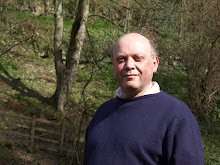
This is my first message since the General Election, and the formation of the new UK Government. The makeup of the new blue-and-yellow, Lib-Con health team for England is becoming clear. Congratulations to Andrew Lansley, who has become Secretary of State after many years in the shadowing role.
Andrew has an incredible knowledge of the NHS and healthcare generally, and over the last few years I have spent a lot of time talking to him, his team and indeed, as you know, to the health ministers in the old Government. I look forward to working with new team.
I am very pleased that the new administration is continuing to promote our vision of the role of the GP – Andrew really does understand the role of the generalist and we both share a belief that GPs should be leading at all levels in the NHS and take more responsibility for commissioning care.
As you know, we have been promoting the role of GP federations. I believe that federations will play an increasingly important role in the NHS, with GPs working collaboratively to provide a wider range of services in their communities, and to move more care out of hospitals. I want to make it clear in this message that we support the continuation of small practices, because the evidence is that the patients like small practices, and we know that the quality of care can be excellent, continuity is important to patients, and that patients like the personalised care that they provide. Practices working more closely together in federations – whilst not losing their identities – will allow more care to be provided closer to home. It will also help us address the issues of access to GPs and provide a solution perhaps to the practice boundary issue.
With this in mind I hosted this week a working meeting on federations, which will be reported in Pulse and RCGP News over the next few weeks. Laurence Pike, a GP in Lincolnshire described how Lincolnshire GPs had grasped the nettle and taken control in their local area, including their local community hospital. In doing so, he said, they’d revolutionised the service available to patients in their rural area. The federation in Croydon, led by Agnelo Fernandes, has made brilliant advances in a totally different environment. As you will be aware, Agnelo’s federation is a HSJ prize-winner for his work on improving patient access to diagnostics.
I was thrilled to hear at that meeting of the commitment and leadership of a number of GPs, and I was pleased that the NHS North West CEO, Mike Farrar, had become a strong advocate for GPs taking this federated agenda forward. We also have strong support from the NHS Confederation.
I am really optimistic for the future, particularly as my conversation with the new Secretary of State this morning reconfirmed his support for the leadership role of GPs, for federations, and for moving care closer to home.
The Daily Mail, however, appears to be at it again: last week, they were really good at helping me debunk the myths surrounding celebrity diets (my daughters were amused to see my health advise alongside pictures of Gwyneth Paltrow and Jennifer Aniston), but on today’s front page they led with an inflammatory piece about GPs out-of-hours care.
Because of my interest in out-of-hours care, and the report I co-authored with David Colin-Thomé for the last Government, I have kept close interest in how we can improve the quality of care for patients. I spoke to all of the political parties before the election and as you know, the College continues to be involved in DH discussions on out-of-hours and improving out-of-hours training. Andrew Lansley’s position – he assures me – is the same as ours. We both believe that doctors working in and out of hours in the UK must speak English of an appropriate standard. He also agrees that GPs should be involved in commissioning care out of hours. He reiterated his belief that GPs should not be forced to work out of hours if they do not want to, but hoped that more would want to get involved once they had more say in the commissioning of care and the design of services.
As I have said for many years, the key to the success of the NHS is to get GPs in leadership positions, locally, regionally and nationally. As GPs we have a good idea what patients need. I believe that with appropriate support we are capable of commissioning better services for our patients. This includes out-of-hours care. All of you will recall in our manifesto a call for:
“Better round-the-clock care for patients
Every patient deserves high-quality care in and out of hours. GPs must be more involved in local decision making and in the commissioning of out-of-hours services to deliver the highest-quality care around the clock.”
I look forward to working with the new health team in England, and continuing to work with the health teams in the other countries on other important aspects of our manifesto in the months and years to come.
Thanks as always for your support. I value your opinions and feedback enormously, and I urge you to get in touch if you have any comments or questions for me.
Friday, 14 May 2010


Thursday, 6 May 2010
Election Day

Picture by: Ian Britton - FreeFoto.com
Election Day is finally here and whatever the outcome, it has been one of the most exciting build-ups I can remember. We will of course work with whichever party is in power in Westminster and whichever parties are in charge of health in Scotland, Northern Ireland and Wales.
My job as Chairman is a huge responsibility and while it’s not (quite) on the scale of leading a major political party, working with the parties has given me a lot more empathy with their leaders and I now understand that however hard you try, you can’t get it right all the time
A good example came last week when I represented the College at a joint conference with the King’s Fund and the Royal College of Physicians on the future of the NHS. It was a stimulating event, attracting a very influential audience, and I used the opportunity to talk at length about the role of the GP at the centre of the NHS, quality general practice, and the need for strong GP leadership and for a call for better integrated care across the specialties.
The general consensus was that whatever the outcome of the election, the NHS is stuffed financially for the next few years, but that GPs are best placed to lead the health service through the turbulent times ahead and that we can be relied upon to run cost-effective services without damaging the quality of patient care.
So you can imagine my dismay when I logged onto the website of GP newspaper and saw the story RCGP Chairman urges GPs to ‘grow up’ on pay. My presentation had been completely ignored in favour of one line on GP pay, which is not the business of the College in any case.
Clocking up the amount of media that I do, I’m usually laid back about the odd misquote here or there. I appreciate that journalists have their job to do and that positive stories about general practice don’t always create the best headlines - but this time I really saw red.
In their defence, the journalists at GP moved swiftly to print a clarification which is now online and will be printed as a letter in next week’s issue, but as far as I’m concerned the damage has been done and I can only apologise to any of you who have already read or will go on to read the story.
To set the record straight, I do think that GPs are now paid "appropriately" and so we should be, after years of being underpaid and underestimated for the work we do. I also believe that we should grow up, but by that I mean “grow into” the role of NHS leaders determining our own way ahead, rather than being passive receivers of what others are doing.
We have overwhelming evidence, most recently from the Commonwealth study and the American College of Physicians, that we have the best primary care system in the world, so why-oh-why is this always overshadowed by how much we are paid?
We can sit back and feel got at or we can choose to rise above it. It’s ironic that when the chips are down, the profession seems to come into its own and we just get on and do the best we possibly can for our patients while the voices of doom resonate around us.
Today has been a busy one so far and I spent this morning at the Department of Health talking about the need for GP leadership at all levels. By the end of today, we should have a new Government and whatever its complexion, we need to use this as an opportunity to show our mettle and demonstrate how GPs can steer the NHS through the choppy waters of the next few years, without our patients noticing any detrimental difference in the care they receive.
Thursday, 29 April 2010
Aboard the HMS Victory

© The British Postal Museum & Archive (BPMA)
The general election is almost upon us, and we’ve seen history being made with the three main party leaders debating on live television. There has also been the first health husting, with the three people who want to be secretary of state for health in England - Andy Burnham, Andrew Lansley and Norman Lamb. It’s absolutely becoming clear that the big issue, whichever country in the UK you live in, is how that country’s NHS can move forward with dramatically reduced resources.
I believe that the solution is to put the GP at the centre of the NHS, and I also believe that as GPs we have a responsibility to stand up and be counted – we need to demonstrate leadership, locally, regionally and nationally after the election. All of the political parties have been talking about primary care and the importance of the role of the GP. In England, the emphasis is on commissioning. As GPs we all know that we focus on the needs of our patients – that’s when we are at our most effective. It is encouraging to hear so many politicians talking about our federated model and it’s been really interesting to hear the differences of thought across the UK.
I am pleased to say that there are a few GPs standing for Parliament – including one of our examiners in Devon – and I watch with great interest to see how they get on. It’s a shame that Howard Stoate, who was an examiner with me a few years ago, has decided to stand down after being an MP for Dartford. He’s made a great contribution to the Health Select Committee to keeping the profile of general practice up in parliament and championing the needs of the public. He’s also been really helpful in getting the College into parliamentary meetings and to be taken seriously at the Health Select Committee. Thank you, Howard.
Last week I fulfilled a boyhood dream – being able to explore that amazing, historic ship HMS Victory. It was a great privilege to be invited to speak and dine with the doctors from the Royal Navy at their base. We discussed the future of General Practice and revalidation. The more I meet up with our colleagues in the defence services, the more I admire the work they do on our behalf, in very difficult circumstances around the world. As you will be aware, my own practice has a role in the care of defence personnel in Birmingham and is closely linked in with Sellyoak where our excellent defence service doctors look after very badly injured soldiers. It was great to meet up with my great friend, Surgeon Commodore Noel Bevan, Surgical Commander Marcus Evershed, Surgeon Captain David Brown, and their colleagues. I learned such a lot from talking over issues with them and sitting in a small workshop on consent and confidentiality. They have special issues regarding revalidation, and I came back thinking more and more that revalidation really is about professional development and needs to be a straightforward activity for GPs, low on bureaucracy, high on education and focussed on the special work that every GP does.
Tuesday was the Fourth Annual Partnership Conference of the College, the King’s Fund and the Royal College of Physicians. The theme of the conference was ‘How can clinicians improve services for patients in a cold financial climate?’ There are no easy answers of course, but one thing is for certain; the future is clearly going to be one where GPs lead in partnership with our specialist colleagues. We are presented with an opportunity when the new Government comes into place – to assert the role of GPs at the heart of the NHS – but to do this we need to be positive, constructive medical leaders providing solutions at all levels.
I also want to mention the College’s International Team, which continues to do some excellent work. We have recently signed an agreement granting MRCGP[INT] accreditation to the Egyptian Family Medicine Fellowship degree; and I would like to thank all of our international colleagues – lead by Professor Val Wass and John Howard – who work tirelessly to raise standards around the world.
As always, I value your opinions and feedback enormously, and I urge you to get in touch if you have any comments or questions for me.
Tuesday, 20 April 2010
The Today Programme and a discussion on Detoxing
April has been, as ever, an enormously busy month, but rather than April Fool’s pranks, I was fortunate enough to spend some time with John Humphrys of the Today Programme and the senior team of Imperial’s Hammersmith Hospital. It was really interesting looking at how that hospital has developed – it’s now very high tech, but at the same time, also very patient-centred, and the staff were fantastic.
In addition to giving an interview myself, it was fascinating to speak to some of the patients on the ward about how their lives and their experience of healthcare has changed since the introduction of the NHS; it was really interesting to hear what high value they placed on general practice, and highlighted again the hugely important role generalism and care, given in the community, will have to play in the future. The interview will be spread out over a number of days leading up to the election.
The last couple of weeks have seen a number of successes, the first and most important being the fact that Brussels have decided to bring forward a review of how the UK can assess the skills and language of doctors coming to work here. This is an important turning point for an extremely important issue.
The College’s work on securing better access to psychological therapies continues to make advances, and one of the major successes this month can be attributed to you, the members. We had over 1400 responses from you – thank you. The work of the College, along with the work from a number of other organisations, has secured commitment from all three of the main political parties to improve access to talking therapies following the General Election. This is an incredible development, and one that further highlights the influence we GPs can have if we work together. Many thanks and congratulations to you all.
Work on the new College building is moving along nicely, and I had the exciting opportunity this week to meet with the designers to discuss the proposed state-of-the-art, 350-seater auditorium. The new building promises to provide a magnificent new home for the staff and members of the College, and I am looking forward to it enormously, despite the fact we won’t move until after I have stepped down!
A smaller, but by no means less relevant success was the fact that the Baggies (my football team, West Bromwich Albion) were promoted!
 I enjoy my media work enormously, and while it is important to ensure the public are armed with factual information about their health, sometimes giving this information can be a bit of fun. I took part in a debate for BBC Radio West Midlands, my stomping ground, about nutritional detoxes. I went head to head with an expert who talked about, among other things, the ‘Aqua Detox Foot Spa’, which by some apparent magic draws toxins out through the feet. I suggested that human beings had kidneys, which were pretty effective after millions of years of evolution. It was a great opportunity to debunk some of the ludicrous myths that pervade in this multi-million pound industry that, I believe, is frankly something of a con. The point I made, above all others, is that the key to good general health is to eat less, eat better, drink lots of water and get plenty of exercise; the human body is a wonderfully advanced machine, and, providing you give it the right fuel, can detox perfectly well on its own.
Thanks as always for your support. I value your opinions and feedback enormously, and I urge you to get in touch if you have any comments or questions for me.
In addition to giving an interview myself, it was fascinating to speak to some of the patients on the ward about how their lives and their experience of healthcare has changed since the introduction of the NHS; it was really interesting to hear what high value they placed on general practice, and highlighted again the hugely important role generalism and care, given in the community, will have to play in the future. The interview will be spread out over a number of days leading up to the election.
The last couple of weeks have seen a number of successes, the first and most important being the fact that Brussels have decided to bring forward a review of how the UK can assess the skills and language of doctors coming to work here. This is an important turning point for an extremely important issue.
The College’s work on securing better access to psychological therapies continues to make advances, and one of the major successes this month can be attributed to you, the members. We had over 1400 responses from you – thank you. The work of the College, along with the work from a number of other organisations, has secured commitment from all three of the main political parties to improve access to talking therapies following the General Election. This is an incredible development, and one that further highlights the influence we GPs can have if we work together. Many thanks and congratulations to you all.
Work on the new College building is moving along nicely, and I had the exciting opportunity this week to meet with the designers to discuss the proposed state-of-the-art, 350-seater auditorium. The new building promises to provide a magnificent new home for the staff and members of the College, and I am looking forward to it enormously, despite the fact we won’t move until after I have stepped down!
A smaller, but by no means less relevant success was the fact that the Baggies (my football team, West Bromwich Albion) were promoted!
Thanks as always for your support. I value your opinions and feedback enormously, and I urge you to get in touch if you have any comments or questions for me.
Tuesday, 23 March 2010
Launch of the RCGP Manifesto
As you will have realised from my previous email, it’s been such a busy couple of weeks with our move from the College building in Princes Gate to Euston Road taking up a lot of thinking time.
In addition we have been working on our manifesto as a way of raising the profile of high-quality general practice and demonstrating once more that GPs are ready to lead and provide solutions for patients, the public and for our National Health Service. We are unashamedly trying to influence whichever party comes into power, in our four home countries.
Further details of how we will be using this – and how you can help us – to raise the profile of high quality general practice in the run up to the election will follow shortly but I wanted you to see it before we issue the press release today.
Our manifesto emphasises the important role of GPs and general practice in promoting the wider public health agenda and we will be using every opportunity to push this, as well as promoting the importance of high-quality care for all through general practice. It was debated at the last College Council and we had lots of suggestions and good ideas which we have tried to condense into the 16 main recommendations.
One of the main calls we make in the manifesto is for improved access to psychological/talking therapies.
Some of you will have seen Sunday’s Observer and BBC News bulletins on psychological therapies. The coverage is the direct result of the help you gave me a few weeks ago when I asked for your views on provision of psychological therapies in your area. Thank you for your support.
Many thanks for your responses – around 1200 of you took the time to reply by filling in the questionnaire and giving us details of what care is like in your locality. I am very grateful. I sent your anonymised comments to Professor Lord Richard Layard, Programme Director for Wellbeing at the London School of Economics, who is leading the campaign to improve access to mental health services for adults and children.
We worked closely with the journalist at the Observer and the news team at the BBC to make sure that we got our key messages across. It was a tricky one because I wanted to say something positive about how the Department of Health in England has invested in improving access to talking therapies while highlighting how the services on the ground vary in quality and in access.
You demonstrated that access for patients is not as good as our patients deserve. - less than 15% of those of you who responded said you could usually access appropriate psychological therapies for adults, with less than 10% saying the same for children. The volume and tone of your e-mails shows the frustration and anger you feel on behalf of your patients.
I tried in the press to assert the patient’s right to nationally-approved treatments, drugs and programmes, recommended by NICE for use in the NHS. I said that I believed that there needed to be better access to psychological therapies and welcomed the substantial investment that has been made over the last few years. I stated our full support for the campaign to ensure that adequate funding continues to go into training therapists, rolling out talking therapies across England and making provision for children.
Richard Layard did the economic analysis and he said: “Mental illness is perhaps the greatest single cause of misery in our country. For those who experience it, the least we should offer is the same standard of care we would automatically provide if they had a physical illness. Politicians who committed to this would receive a huge vote of thanks from millions of families in this country.”
I continue to assert that GPs and the College are willing to provide solutions and by backing the campaign to support mental health, I believe that we are not shying away from our responsibility to speak out with and on behalf of our patients. In this case by working closely with MIND, the RCPsych and other medical Royal Colleges.
We are making it a focus of our conversations with all of the three main political parties. I’m pleased to say that our efforts are having an impact as it seems to be resonating with them all. Our colleagues in Northern Ireland, Scotland and Wales are also doing their bit to ensure that it's high on the agenda across the UK.
I'm planning to invite Lord Layard into the College over the next few weeks for a "policy breakfast" so please let me know if you'd be interested in attending.
Thanks again for all your support – your efforts are very much appreciated and I hope we can achieve some good on behalf of our patients and their families.
In addition we have been working on our manifesto as a way of raising the profile of high-quality general practice and demonstrating once more that GPs are ready to lead and provide solutions for patients, the public and for our National Health Service. We are unashamedly trying to influence whichever party comes into power, in our four home countries.
Further details of how we will be using this – and how you can help us – to raise the profile of high quality general practice in the run up to the election will follow shortly but I wanted you to see it before we issue the press release today.
Our manifesto emphasises the important role of GPs and general practice in promoting the wider public health agenda and we will be using every opportunity to push this, as well as promoting the importance of high-quality care for all through general practice. It was debated at the last College Council and we had lots of suggestions and good ideas which we have tried to condense into the 16 main recommendations.
One of the main calls we make in the manifesto is for improved access to psychological/talking therapies.
Some of you will have seen Sunday’s Observer and BBC News bulletins on psychological therapies. The coverage is the direct result of the help you gave me a few weeks ago when I asked for your views on provision of psychological therapies in your area. Thank you for your support.
Many thanks for your responses – around 1200 of you took the time to reply by filling in the questionnaire and giving us details of what care is like in your locality. I am very grateful. I sent your anonymised comments to Professor Lord Richard Layard, Programme Director for Wellbeing at the London School of Economics, who is leading the campaign to improve access to mental health services for adults and children.
We worked closely with the journalist at the Observer and the news team at the BBC to make sure that we got our key messages across. It was a tricky one because I wanted to say something positive about how the Department of Health in England has invested in improving access to talking therapies while highlighting how the services on the ground vary in quality and in access.
You demonstrated that access for patients is not as good as our patients deserve. - less than 15% of those of you who responded said you could usually access appropriate psychological therapies for adults, with less than 10% saying the same for children. The volume and tone of your e-mails shows the frustration and anger you feel on behalf of your patients.
I tried in the press to assert the patient’s right to nationally-approved treatments, drugs and programmes, recommended by NICE for use in the NHS. I said that I believed that there needed to be better access to psychological therapies and welcomed the substantial investment that has been made over the last few years. I stated our full support for the campaign to ensure that adequate funding continues to go into training therapists, rolling out talking therapies across England and making provision for children.
Richard Layard did the economic analysis and he said: “Mental illness is perhaps the greatest single cause of misery in our country. For those who experience it, the least we should offer is the same standard of care we would automatically provide if they had a physical illness. Politicians who committed to this would receive a huge vote of thanks from millions of families in this country.”
I continue to assert that GPs and the College are willing to provide solutions and by backing the campaign to support mental health, I believe that we are not shying away from our responsibility to speak out with and on behalf of our patients. In this case by working closely with MIND, the RCPsych and other medical Royal Colleges.
We are making it a focus of our conversations with all of the three main political parties. I’m pleased to say that our efforts are having an impact as it seems to be resonating with them all. Our colleagues in Northern Ireland, Scotland and Wales are also doing their bit to ensure that it's high on the agenda across the UK.
I'm planning to invite Lord Layard into the College over the next few weeks for a "policy breakfast" so please let me know if you'd be interested in attending.
Thanks again for all your support – your efforts are very much appreciated and I hope we can achieve some good on behalf of our patients and their families.
Monday, 15 March 2010
The Inclusion Health Report, and a trip to Buck House
It’s been an interesting fortnight – like most fortnights – with a lot of variety.
Last Thursday we hosted the launch of a landmark report, 'Inclusion Health', which looks at the role of primary care in addressing the needs of our socially disadvantaged and harder to reach groups.
New analysis by the Social Exclusion Taskforce in the Cabinet Office and the Department of Health in England shows that despite the progress we have made in healthcare, people such as the homeless, those with learning disabilities, people leaving prison and sex workers, are still finding it difficult to access the services they need, often with life limiting results.
My reasons for wanting to be a GP are the same today as when I was at school – I wanted to make a difference and help people less fortunate than myself. It’s something that’s really driven me throughout my career. Working in a particularly deprived area is so rewarding, but incredibly frustrating. We have lots of disadvantaged groups and I still feel we can do more to reach out and make sure we are providing the care they need and helping them live as long and healthy lives as possible.
We’ve acknowledged the need for clinical leadership and I’m delighted to have been asked to chair the new National Inclusivity Board. We need to think differently about disadvantaged groups and I’m determined that high quality general practice plays a key role in improving such poor outcomes.

Photograph © FreeFoto.com
Last week I was also summoned to give evidence to the Health Select Committee on the use of overseas doctors in providing out-of-hours services. The tragic case in Cambridgeshire served to highlight the unacceptable variance in OOH care across the country, and we must all work together to ensure that, regardless of where patients live, they can expect to receive a universally excellent quality of care from a competent doctor whether it’s day- or night time.
I had some fantastic trainees shadowing me last week, and once again I have been so impressed with the enthusiasm and willingness to learn demonstrated by our Associates in Training. I’ve been trying to reach out to the younger members and it’s been great to see so many take up my offer to spend a day at the college. What’s more, it’s fantastic having these keen, young doctors around, and so rewarding to give them an insight into the other side of general practice.
Thanks as always for your support. I value your opinions and feedback enormously, and I urge you to get in touch if you have any comments or questions for me.
Friday, 12 February 2010
The Out of Hours Care Report
The last week has been very busy, both politically at a national level and locally in my surgery, but most of my time has however been focused on the issue of the performers‘ list and Out of Hours provision, following the inquest into the tragic case of Mr Gray. The Coroner was very clear in delivering a verdict of unlawful killing on the Out of Hours doctor Daniel Ubani. This whole case has upset me greatly, and clearly this was an appalling tragedy. I do feel for Mr Gray’s family, and I admire how Stuart Gray, his son and West Midlands GP, has handled himself throughout what must be a really difficult time.
The report can be found here
I hope you will have a chance to read the report in full and would be very interested in your feedback – especially as I have to give evidence on the issue to a Parliamentary Select Committee in early March, which is a stressful experience in itself.
I know that all of us GPs want to provide the best quality care for our patients. It’s a real shame that people feel that because of this case we’ve all let our patients down. I hope that some good can come out of this and that we can improve the system to ensure that patients get the care they deserve, night and day, regardless of where they live.
Thanks as always for your support. I value your opinions and feedback enormously, and I urge you to get in touch if you have any comments or questions for me.
The independent review that I carried out with the Primary Care Tsar Dr David Colin Thomé was published immediately after the inquest. The Minister, Mike O’Brien, David and I were immersed in news and television interviews for most of the day. Most went reasonably well but Jeremy Vine, and then Edwina Currie had a go at me – ‘the good professor’. They seemed to think that we should go back to pre-2004 – complete nonsense. They don’t understand.
It seemed like they were putting all the blame on GPs – you and me – or the GP contract. I tried very hard to say that the contract was needed and how I had spent five or six years working every other night and every other weekend, being exhausted and having to go out and visit people – many of whom didn’t need visiting – children with runny noses and sore ears in the middle of the night. I can even remember visiting an old woman with a chest infection one Christmas to find a GP from another practice in the same bedroom visiting her husband who also had a chest infection!
I tried to point out that the awful case in Cambridgeshire has nothing to do with the contract and that the whole point of moving commissioning to PCTs was that better quality care could be provided across a locality by GPs who are alert and not exhausted both in and out of hours. They completely missed the point, but most of the other media thankfully took a more sensible view.
We conclude in our report that the quality of OOH provision varies across the UK, and made twenty-four recommendations, which include:
It seemed like they were putting all the blame on GPs – you and me – or the GP contract. I tried very hard to say that the contract was needed and how I had spent five or six years working every other night and every other weekend, being exhausted and having to go out and visit people – many of whom didn’t need visiting – children with runny noses and sore ears in the middle of the night. I can even remember visiting an old woman with a chest infection one Christmas to find a GP from another practice in the same bedroom visiting her husband who also had a chest infection!
I tried to point out that the awful case in Cambridgeshire has nothing to do with the contract and that the whole point of moving commissioning to PCTs was that better quality care could be provided across a locality by GPs who are alert and not exhausted both in and out of hours. They completely missed the point, but most of the other media thankfully took a more sensible view.
We conclude in our report that the quality of OOH provision varies across the UK, and made twenty-four recommendations, which include:
- PCTs should review the performance management arrangements in place for their out-of-hours services and ensure they are robust and fit for purpose;
- The Department of Health should issue guidance to PCTs to assist them in making decisions about whether or not a doctor has the necessary knowledge of English;
- The Department of Health should develop and introduce an improvement programme for PCTs to support their commissioning and performance management of out-of-hours services;
- Out-of-hours providers should consider the recruitment and selection processes in place for clinical staff to ensure they are robust and that they are following best practice;
- Strategic Health Authorities should consider how they monitor action taken by PCTs in response to this report and in carrying out appropriate performance management of out-of-hours providers; and
- Providers should co-operate with other local and regional providers (both in and out-of-hours) to share any concerns over staff working excessive hours for their respective services.
The report can be found here
I hope you will have a chance to read the report in full and would be very interested in your feedback – especially as I have to give evidence on the issue to a Parliamentary Select Committee in early March, which is a stressful experience in itself.
I know that all of us GPs want to provide the best quality care for our patients. It’s a real shame that people feel that because of this case we’ve all let our patients down. I hope that some good can come out of this and that we can improve the system to ensure that patients get the care they deserve, night and day, regardless of where they live.
Thanks as always for your support. I value your opinions and feedback enormously, and I urge you to get in touch if you have any comments or questions for me.
Subscribe to:
Posts (Atom)